The Complete Vitamin A Guide: Vision, Retinoids, and Synergies
1. Why Vitamin A Matters — and Why the Form Matters More
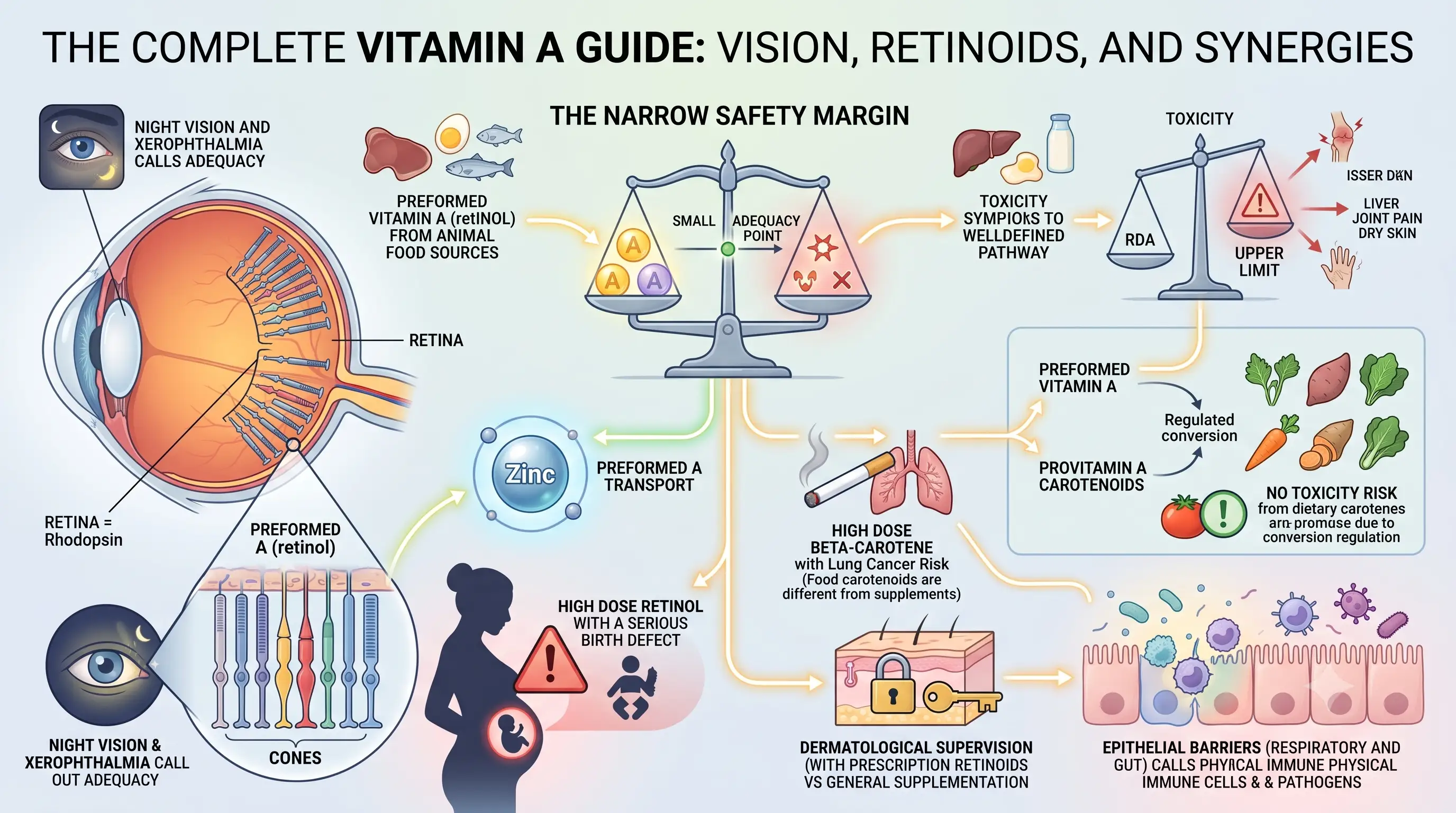
Vitamin A is a fat-soluble vitamin essential for vision, immune function, reproduction, and normal cellular growth and differentiation[1]. In the eye it forms part of rhodopsin, the light-absorbing pigment in the retina that makes vision in low light possible. In skin and mucous membranes it acts as a signalling molecule regulating cell turnover — which is why the epithelial linings of the airways and gut, the body's first physical barrier against pathogens, depend on it.
Two Different Things Called "Vitamin A"
- Preformed vitamin A (retinol, retinyl palmitate, retinyl acetate): From animal foods — liver, fish liver oils, egg yolk, dairy — and from supplements. Immediately usable, and the form that accumulates and can become toxic.
- Provitamin A carotenoids (mainly beta-carotene): From orange, yellow, and dark green plants. The body converts them as needed, and conversion is regulated — which is why dietary beta-carotene does not cause vitamin A toxicity. Conversion is also inefficient and varies widely between individuals due to genetics.
Because of this difference, intakes are expressed in mcg RAE (retinol activity equivalents), which accounts for the lower conversion efficiency of carotenoids.
Requirements and Limits
| Group | RDA | Upper limit (preformed vitamin A only) |
|---|---|---|
| Adult men | 900 mcg RAE | 3,000 mcg/day |
| Adult women | 700 mcg RAE | 3,000 mcg/day |
| Pregnancy | 750–770 mcg RAE | 2,800–3,000 mcg/day |
| Breastfeeding | 1,200–1,300 mcg RAE | 2,800–3,000 mcg/day |
| Children | Lower by age | Substantially lower — check age-specific limits |
2. A Deep Dive Into Vitamin A's Key Roles
Vision and Eye Health
Vitamin A deficiency is a leading cause of preventable childhood blindness worldwide, and supplementation programmes in deficient populations are a major global public health measure. Deficiency first affects night vision, then progresses to dryness of the conjunctiva and cornea (xerophthalmia) and eventually to corneal damage. Adequate intake supports normal night vision and the integrity of the ocular surface — but this is about preventing deficiency, not about improving vision in someone who is already replete.
Immune Function and Epithelial Integrity
Vitamin A maintains the epithelial barriers of the respiratory, digestive, and urinary tracts and is involved in the development and function of immune cells. Deficiency is associated with increased susceptibility to infection, and in deficient children, supplementation reduces mortality from measles and diarrhoeal disease — again, a deficiency-correction effect rather than a general immunity booster.
Skin
As a retinoid, vitamin A is involved in the production of new skin cells and in collagen metabolism. It is important to keep two things separate here: prescription-strength topical retinoids such as tretinoin, and oral isotretinoin, are medications used under dermatological supervision for acne and photoaging, with well-documented effects and well-documented risks. General oral vitamin A supplementation is a distinct matter and has not been shown to produce comparable skin effects — and taking high-dose retinol in the hope of a retinoid-like result is precisely the route to toxicity described below.
Reproduction and Development
Vitamin A is required for normal embryonic development — which is also why excess is teratogenic. Both too little and too much cause developmental harm, and this is one of the clearest examples of a nutrient with a genuinely narrow optimal range.
What the Evidence Does and Doesn't Show
| Use | Strength of evidence | Notes |
|---|---|---|
| Preventing/correcting deficiency | Definitive | Major global health intervention |
| Night vision and ocular surface | Well established | In the context of adequacy, not enhancement |
| Immune resistance in deficient populations | Well established | Not a general immune booster |
| Skin effects from oral supplements | Not established | Prescription retinoids are a separate matter |
| Beta-carotene supplements for cancer prevention | Negative — increased risk in smokers | See safety section |
3. Shop Smart: How to Choose the Right Vitamin A
Step 1: Prefer Beta-Carotene for Routine Supplementation
Because the body regulates conversion of beta-carotene, provitamin A carotenoids carry no risk of hypervitaminosis A. For general supplementation in people without a diagnosed deficiency, a product supplying vitamin A largely or entirely as beta-carotene is the lower-risk choice — with one significant exception covered in the warning below.
Step 2: Add Up Every Source
This matters more here than for almost any other nutrient. Multivitamins, prenatal vitamins, cod liver oil, eye-health formulas, and "skin, hair and nails" products all commonly contain preformed vitamin A, and it is easy to approach or exceed the upper limit by combining two or three products without realising. Read labels for "retinyl palmitate," "retinyl acetate," and "retinol" and total them up.
Step 3: Avoid Megadoses and Check Third-Party Testing
Never take doses above the RDA for extended periods unless a physician has directed it for a diagnosed condition. Look for USP or NSF verification, and be particularly cautious with cod liver oil products, which supply vitamin A and D together in amounts that vary considerably by brand.
4. Everyday Habits: Food Sources and Absorption
- Preformed vitamin A: Liver is extraordinarily concentrated — a single serving of beef liver can exceed the upper limit several times over, which is why liver is generally advised no more than occasionally and is not recommended in pregnancy. Egg yolk, dairy, and oily fish supply moderate amounts.
- Beta-carotene: Carrots, sweet potato, pumpkin, butternut squash, spinach, kale, red pepper, mango, and cantaloupe.
- Eat it with fat: As a fat-soluble nutrient, absorption depends on dietary fat. Adding olive oil to cooked carrots or eating spinach with a dressing meaningfully increases uptake.
- Cook lightly: Gentle cooking breaks down plant cell walls and improves carotenoid availability — cooked carrots deliver more absorbable beta-carotene than raw.
- Harmless orange skin: Very high carotenoid intake can tint the palms and soles orange (carotenemia). It is reversible and not toxic — a useful reminder that beta-carotene behaves quite differently from retinol.
5. The Perfect Match: Synergies and Incompatibilities
Nutrients rarely work in isolation, and vitamin A has one genuinely important nutrient partnership and one absolutely critical drug contraindication.
✅ Combinations That Work Well Together
- Zinc: The liver requires zinc to produce retinol-binding protein, which transports vitamin A from liver stores to the tissues. Zinc deficiency can therefore produce functional vitamin A deficiency even when liver stores are adequate — a real and well-described interaction.
- Dietary fat: Necessary for absorption of both retinol and carotenoids.
- Vitamin D and K2: The fat-soluble vitamins interact in immune regulation and bone metabolism, and very high vitamin A intakes may antagonise vitamin D. Balance across the group is more sensible than loading one.
- Iron: Vitamin A status influences iron mobilisation, and the two deficiencies frequently coexist in populations where both are common.
❌ Requiring Caution or Avoidance
- Isotretinoin, acitretin, and other oral retinoid medications: Never take vitamin A supplements alongside these. They are synthetic vitamin A derivatives, and combining them causes additive toxicity.
- Orlistat and bile acid sequestrants (cholestyramine): Reduce absorption of fat-soluble vitamins; separate dosing and monitoring may be needed.
- Alcohol: Chronic heavy use both depletes vitamin A stores and increases the liver's susceptibility to vitamin A toxicity — a combination worth avoiding.
- Lutein and other carotenoids: High-dose beta-carotene competes for the same absorption pathways and can reduce lutein uptake.
- Tetracycline antibiotics: High-dose vitamin A has been associated with increased intracranial pressure when combined.
6. Dosage and Safety
Hypervitaminosis A
Because retinol is stored in the liver, excess accumulates. Chronic toxicity can develop over months of intakes above the upper limit and causes headache, blurred vision, nausea, dizziness, dry and peeling skin, hair loss, bone and joint pain, liver damage, and raised pressure around the brain. Long-term high intakes have also been associated with reduced bone density and increased hip fracture risk in observational research. Acute toxicity from a single very large dose causes severe headache, vomiting, drowsiness, and skin peeling.
Who Should Take Particular Care
- People with liver disease — vitamin A is stored and metabolised in the liver, and toxicity risk is higher
- People with chronic heavy alcohol use
- People taking retinoid medications
- People with fat malabsorption (celiac, Crohn's, cystic fibrosis, after bariatric surgery), who may be genuinely deficient and need medically guided supplementation
- Children, for whom upper limits are much lower and accidental overdose from adult supplements is a real risk
7. Frequently Asked Questions
Q. Can I take vitamin A for my skin instead of a prescription retinoid?
A. No. Oral vitamin A supplements have not been shown to reproduce the effects of prescription topical retinoids, and taking high doses in that hope is the classic route to toxicity. A dermatologist can prescribe something that works.
Q. Is beta-carotene safe if I quit smoking years ago?
A. The trial findings applied to current and former smokers, so the cautious answer is to avoid beta-carotene supplements and get carotenoids from food instead. Dietary beta-carotene has not shown this risk.
Q. Should I eat liver for vitamin A?
A. Occasionally is fine for most adults, but a single serving can exceed the daily upper limit several times over. It is generally advised against in pregnancy for exactly this reason.
Q. My palms turned slightly orange. Is that dangerous?
A. That is carotenemia from beta-carotene, and it is harmless and reversible. It is quite different from retinol toxicity, which does not present this way.
Q. Do I need a vitamin A supplement at all?
A. In most developed countries, a varied diet supplies enough, and deficiency is uncommon outside malabsorption conditions. This is a nutrient where the risk of over-supplementing generally exceeds the risk of falling short.
8. Conclusion and Precautions
Vitamin A is unambiguously essential — its role in vision, immune barriers, and development is among the best-established in nutrition, and correcting deficiency is one of the highest-impact public health interventions there is. It is also a nutrient where the correct advice for most well-nourished people is not to supplement aggressively. Get it from a varied diet, favour beta-carotene if you do supplement, add up every product you take, and treat the pregnancy and smoking warnings as absolute rather than cautionary.
⚠️ Precautions: The FDA has not evaluated vitamin A supplements for the treatment of any medical condition, and this article is not medical advice. Pregnant women must avoid high doses of preformed vitamin A (retinol), which can cause severe birth defects — choose prenatal products supplying beta-carotene and avoid liver. Smokers and former smokers should avoid beta-carotene supplements, which increased lung cancer incidence in large trials. Do not exceed 3,000 mcg/day of preformed vitamin A from all sources. Never combine with isotretinoin or other retinoid medications. Consult a healthcare professional before supplementing if you have liver disease, malabsorption, or are considering it for a child.
9. Sources and References
- National Institutes of Health (NIH), ODS — Vitamin A and Carotenoids Fact Sheet for Health Professionals
https://ods.od.nih.gov/factsheets/VitaminA-HealthProfessional/ - World Health Organization — Vitamin A deficiency and supplementation
https://www.who.int - Linus Pauling Institute, Oregon State University — Micronutrient Information Center: Vitamin A
https://lpi.oregonstate.edu - Harvard T.H. Chan School of Public Health, The Nutrition Source — Vitamin A
https://www.hsph.harvard.edu - Mayo Clinic — Vitamin A: Uses and risks
https://www.mayoclinic.org - American College of Obstetricians and Gynecologists (ACOG) — Nutrition during pregnancy
https://www.acog.org
© 2026 Healing-Finder. All rights reserved.