The Complete Green Tea Extract Guide: EGCG, Metabolism, and Safe Use
1. What Green Tea Extract Is — and How It Differs From Tea
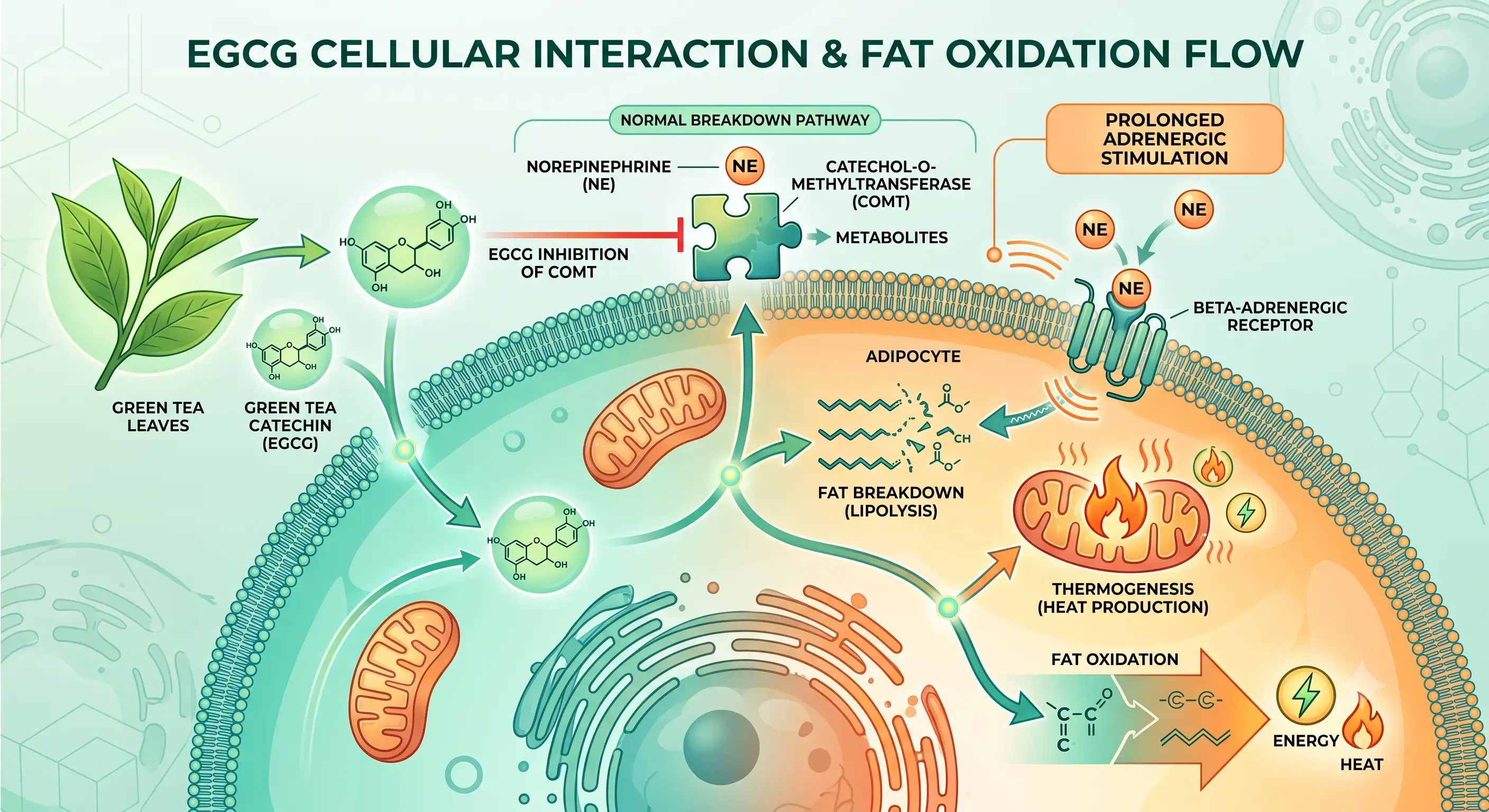
Green Tea Extract is a concentrated preparation of Camellia sinensis leaves, standardized for its catechin content. The most abundant and most studied catechin is EGCG (epigallocatechin gallate). Catechins have been studied for their potential to support fat oxidation and thermogenesis — the process by which the body expends energy as heat[1].
The proposed mechanism is that EGCG slows the breakdown of norepinephrine, a signalling molecule involved in fat mobilisation, and that this effect is amplified by the caffeine naturally present in green tea. This is a plausible mechanism supported by short-term metabolic studies; it is not the same as demonstrating meaningful long-term changes in body composition, and Section 2 covers what the outcome research actually found.
2. A Deep Dive Into Green Tea's Studied Effects
Body Fat and Weight
Some clinical trials suggest that green tea catechins may modestly support reductions in body weight and abdominal fat when combined with regular exercise and a balanced diet[2]. It is worth stating the size of that effect honestly: reviews of the weight-loss literature generally describe the average difference as small — often on the order of a kilogram or less over several months — with substantial variation between studies, and effects that appear larger in some populations than others. Green tea extract is not a weight-loss treatment, and no supplement substitutes for energy balance.
Metabolic Rate and Fat Oxidation
Short-term studies have measured small increases in energy expenditure and fat oxidation after catechin plus caffeine intake. Whether this translates into meaningful long-term change is less clear, partly because the body adapts and partly because caffeine alone accounts for some of the effect.
Antioxidant Activity and Cardiometabolic Markers
Green tea polyphenols are potent antioxidants in laboratory settings, and trials have examined effects on blood lipids, blood pressure, and inflammatory markers, with modest and somewhat inconsistent findings. Regular green tea drinking has been associated in population studies with favourable cardiovascular outcomes — an association from dietary patterns, not evidence that a concentrated extract produces the same result.
A Necessary Correction About the Liver
Green tea extract is sometimes marketed as "liver protective," and some research has examined catechins in fatty liver disease. That framing needs qualifying rather than repeating: the same compound has a well-documented association with liver injury at supplemental doses, and NIH's drug-induced liver injury resource classifies green tea as a well-established cause of clinically apparent liver injury[4]. Presenting green tea extract as a liver-support supplement is not supportable, and this page does not do so.
What the Evidence Does and Doesn't Show
| Use | Strength of evidence | Notes |
|---|---|---|
| Small increase in energy expenditure / fat oxidation | Moderate, short-term | Caffeine contributes substantially |
| Body weight / abdominal fat | Small and inconsistent | Only alongside diet and exercise |
| Blood lipids and blood pressure | Modest, mixed | Biomarker level |
| Cardiovascular outcomes from tea drinking | Observational association | Does not transfer to extracts |
| Liver protection | Not supported — see safety section | Extracts carry a documented liver injury signal |
3. Shop Smart: How to Choose the Right Green Tea Extract
Step 1: EGCG Content — and Why Less Can Be Wiser
Labels should state the standardized EGCG content, not just total extract weight or "polyphenols." Products commonly standardize to 45–50% EGCG or higher. Note that there is considerable variability in catechin and EGCG concentration between marketed products, which researchers have suggested may partly explain why some products have been implicated in liver injury while others have not[4]. A clearly stated EGCG figure lets you keep your total daily intake within a sensible range rather than guessing.
Step 2: Caffeinated vs. Decaffeinated
Caffeine contributes to the thermogenic effect and works alongside catechins, so caffeinated extracts are often chosen for that purpose. Decaffeinated versions are the better choice if you are sensitive to stimulants, take other caffeinated products, have hypertension or anxiety, or take it later in the day. Add up caffeine from all sources — extracts, coffee, pre-workouts, and energy drinks together add up quickly.
Step 3: Third-Party Testing and Realistic Dosing
Independent verification (USP, NSF) is worth insisting on in this category given the variability noted above. Be wary of "fat burner" blends that combine high-dose EGCG with multiple stimulants and do not disclose individual amounts — these make it impossible to know your actual EGCG intake, which is exactly the number that matters for safety.
4. Everyday Habits: Sensible Use
- Take it with food. This is a safety point, not just a comfort one: liver injury cases have been associated disproportionately with concentrated extracts taken on an empty stomach, and fasted intake also increases nausea. Taking green tea extract with a meal is the more prudent habit.
- Timing around exercise: Some people take it before cardiovascular exercise on the basis of the thermogenic mechanism. Any effect on fat oxidation is small, and it will not make a workout meaningfully more effective on its own.
- Consider drinking tea instead. Two to three cups of brewed green tea daily provide catechins and L-theanine within a form that has a much cleaner safety record, and fits easily into a daily routine.
- Watch total caffeine, particularly in the afternoon, since sleep quality affects appetite regulation and body composition more reliably than any thermogenic supplement.
- The foundations: Energy balance, protein intake, resistance training, daily movement, and sleep are what actually change body composition. Green tea extract sits at the margins of that picture.
5. The Perfect Match: Synergies and Incompatibilities
Nutrients rarely work in isolation. Several of the interactions below involve prescription medication and are well documented.
✅ Combinations Sometimes Used Together
- Caffeine (naturally present): The best-supported pairing, since caffeine and catechins appear to act on complementary points in the same pathway. Also the main reason to watch your total stimulant load.
- L-Theanine: Present in tea itself and often paired with caffeine for calmer alertness. A reasonable combination with a modest evidence base.
- L-Carnitine: Frequently marketed as a "fat stack" with green tea extract. The mechanistic story is neat, but evidence that the combination produces meaningful additional fat loss is limited — treat it as a hypothesis rather than an established synergy.
- Vitamin C: There is some evidence that ascorbic acid improves the stability of catechins in the digestive tract, which may modestly support absorption. A reasonable, low-cost addition — the size of the effect should not be overstated.
❌ Requiring Caution
- Iron supplements and iron-rich meals: Tannins and catechins bind non-heme iron strongly and reduce its absorption. Separate by at least two hours — particularly important for anyone with low ferritin.
- Nadolol and some other beta-blockers: Green tea at high doses has been shown to reduce blood levels, and therefore the effectiveness, of nadolol[3].
- Atorvastatin: Green tea extract can reduce blood levels of this cholesterol-lowering medication[3].
- Anticoagulants: Green tea contains vitamin K and has been reported to interact with warfarin; discuss with your physician.
- Other stimulants: Combining caffeinated extracts with pre-workouts or energy drinks raises the risk of palpitations, anxiety, elevated blood pressure, and poor sleep.
- Alcohol and other liver-stressing substances: Given the liver injury signal, combining concentrated extracts with heavy alcohol use or other hepatotoxic supplements is unwise.
6. Dosage, Timing, and Safety
Typical Ranges
- EGCG: Studies commonly use a few hundred milligrams daily. European food safety assessment has identified intakes at and above roughly 800 mg of EGCG per day from supplements as the level associated with signals of liver stress, so staying well below that is the prudent approach.
- Timing: With food. Split doses rather than one large dose.
- Duration: Reassess after a defined trial period rather than taking it indefinitely, and stop if you notice no benefit.
Common Side Effects
Reported effects of green tea extract supplements include nausea, constipation, abdominal discomfort, and increased blood pressure[3]. Caffeinated products can also cause jitteriness, palpitations, and insomnia.
Two further points matter. First, susceptibility appears partly genetic: liver injury from green tea is closely associated with the HLA-B*35:01 allele, which is carried by roughly 5 to 15 percent of Americans[3][4] — and there is no practical way to know your status in advance. Second, this concerns extracts, not brewed tea.
Stop immediately and seek medical attention if you develop yellowing of the skin or eyes, dark urine, pale stools, persistent nausea, unusual fatigue, or pain in the upper right abdomen. Do not use green tea extract supplements if you have liver disease or abnormal liver tests. Consult a healthcare professional first if you take any prescription medication (particularly nadolol, atorvastatin, or anticoagulants), have high blood pressure or a heart rhythm condition, are sensitive to caffeine, or are pregnant or breastfeeding — supplemental extracts are not recommended in pregnancy, and high folate-antagonising catechin intakes have raised additional concerns in that context.
7. Frequently Asked Questions
Q. Is drinking green tea risky too?
A. No — health authorities report no safety concerns for green tea consumed as a beverage by adults. The liver injury reports involve concentrated extracts in tablet or capsule form.
Q. How much weight can I expect to lose?
A. Very little from the supplement itself. Reviews describe average effects as small and inconsistent, and only in the context of diet and exercise. Any product promising substantial weight loss from green tea extract is overselling it.
Q. Should I take it on an empty stomach for better absorption?
A. We would advise against it. Fasted intake of concentrated extracts is the pattern most associated with both nausea and reported liver injury. Take it with food.
Q. Decaf or regular?
A. Regular contributes more to the thermogenic effect; decaf is the better choice if you are stimulant-sensitive, take it later in the day, or already consume caffeine from other sources.
Q. Can I take it with my iron supplement?
A. Not at the same time. Catechins bind iron and reduce its absorption — separate them by at least two hours.
Q. Is there a safer way to get the benefits?
A. Drinking two to three cups of brewed green tea daily gives you catechins and L-theanine with a far cleaner safety record. For most people that is the more sensible route.
8. Conclusion and Precautions
Green tea extract has a real mechanism and a large research literature, but the practical picture is one of small, inconsistent effects on body fat alongside a documented — if uncommon — risk of serious liver injury that sets it apart from most supplements in this category. It may offer modest support to a metabolic routine already built on diet, training, and sleep. For many people, brewed green tea delivers most of what is appealing here with far less risk; if you do choose an extract, keep the EGCG dose moderate, take it with food, know the warning signs, and treat the medication interactions as real.
⚠️ Precautions: The FDA has not evaluated green tea extract for the treatment of any medical condition, and this article is not medical advice. Green tea extract is a well-documented cause of clinically apparent liver injury in susceptible individuals; do not use it if you have liver disease, avoid taking it on an empty stomach, keep EGCG intake moderate, and stop immediately and seek medical care if you develop jaundice, dark urine, persistent nausea, unusual fatigue, or upper right abdominal pain. It can reduce the effectiveness of nadolol and lower blood levels of atorvastatin, and it reduces iron absorption. Not recommended during pregnancy or breastfeeding. Consult a healthcare professional before starting supplementation, especially if you take prescription medication or have liver, heart, or blood pressure concerns.
9. Sources and References
- National Institutes of Health (NIH), ODS — Dietary Supplements for Weight Loss
https://ods.od.nih.gov/factsheets/WeightLoss-HealthProfessional/ - Mayo Clinic — Green tea and weight loss
https://www.mayoclinic.org - NIH National Center for Complementary and Integrative Health (NCCIH) — Green Tea: Usefulness and Safety
https://www.nccih.nih.gov/health/green-tea - NIH LiverTox — Clinical and Research Information on Drug-Induced Liver Injury: Green Tea
https://www.ncbi.nlm.nih.gov/books/NBK547925/ - European Food Safety Authority (EFSA) — Scientific opinion on the safety of green tea catechins
https://www.efsa.europa.eu - Linus Pauling Institute, Oregon State University — Micronutrient Information Center: Tea
https://lpi.oregonstate.edu
© 2026 Healing-Finder. All rights reserved.