The Complete Iron Guide: Deficiency, Absorption, and Synergies
1. Why Iron Matters — and Why It Is Different From Other Supplements
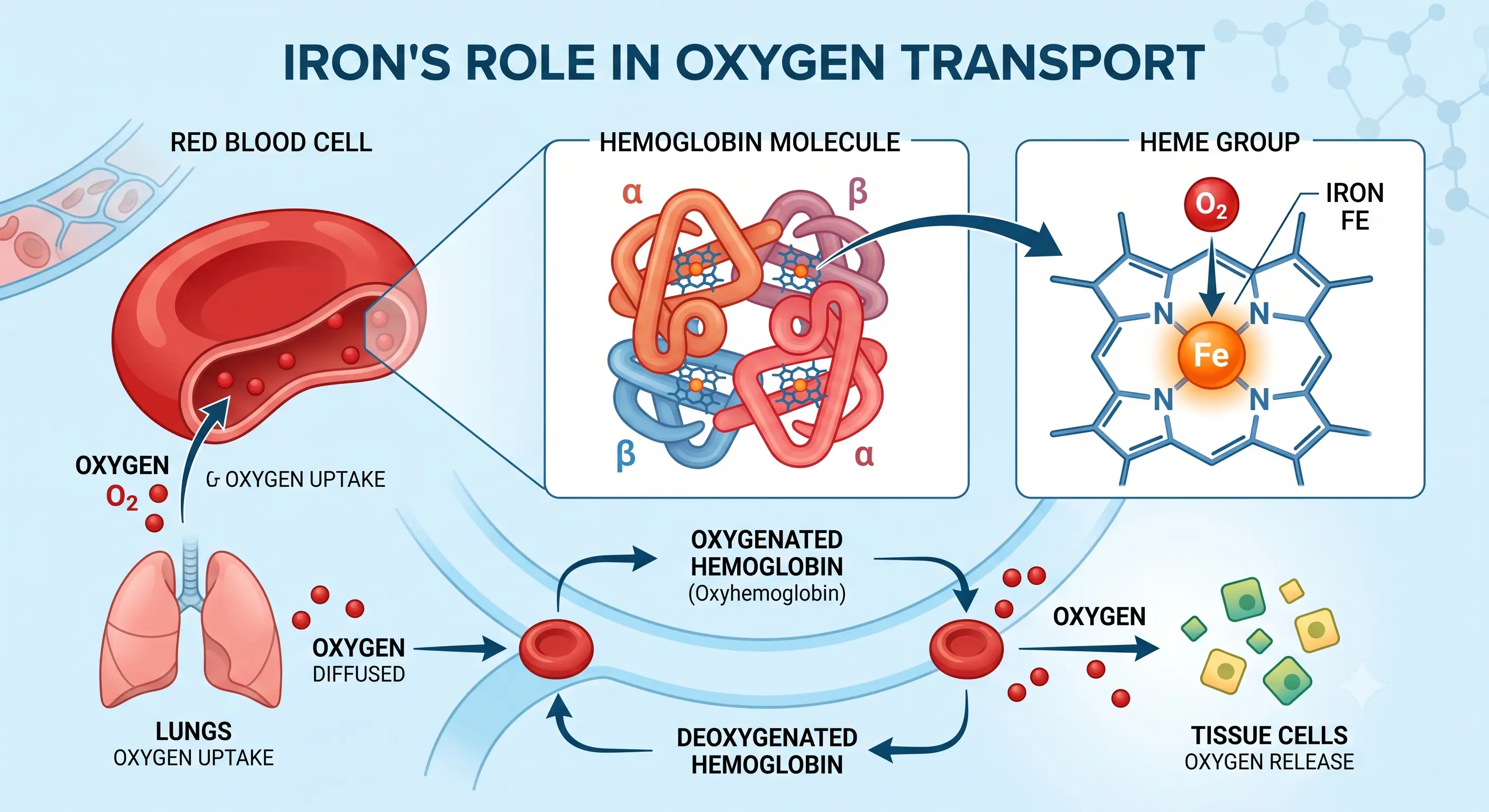
Iron is an essential mineral whose central job is oxygen transport. It sits at the core of haemoglobin, which carries oxygen from the lungs to every tissue, and of myoglobin, which stores oxygen in muscle. It is also required by enzymes involved in energy production, DNA synthesis, immune function, and the production of neurotransmitters[1].
Iron deficiency is the most common nutritional deficiency worldwide, and it is genuinely common in menstruating women, pregnancy, adolescents, endurance athletes, and people with restricted diets. So this is one of the few pages on this site where the nutrient in question causes a widespread, real, and correctable problem.
Fatigue is also a poor guide: it has dozens of causes, and most tired people are not iron deficient. Taking iron "just in case" can additionally mask the very blood test that would have found the real cause.
Get a blood test first — ferritin, plus a full blood count — and supplement based on the result, ideally with your doctor's guidance. Everything else on this page assumes you have done that.
2. A Deep Dive Into Iron's Roles and Deficiency
Oxygen Transport and Energy
Around two-thirds of the body's iron is in haemoglobin. When iron falls, the bone marrow produces smaller, paler red blood cells that carry less oxygen — the picture of iron deficiency anaemia. The characteristic symptoms follow directly: fatigue that rest does not fix, breathlessness on mild exertion, pale skin, dizziness, headaches, cold hands and feet, and reduced exercise capacity.
Deficiency Without Anaemia — an Underappreciated Stage
This is worth understanding, because it is often missed. Iron stores deplete in stages: ferritin falls first, and only later does haemoglobin drop. A person can therefore have low iron stores with a completely normal haemoglobin and still experience fatigue, poor exercise tolerance, hair shedding, brittle nails, restless legs, or reduced concentration. Studies in menstruating women with low ferritin but no anaemia have reported improvement in fatigue with iron repletion.
The practical implication is that a "normal" full blood count does not rule out iron deficiency — ferritin is the test that matters. If you are asking about iron, ask specifically for ferritin.
Restless Legs Syndrome
Low brain iron is implicated in restless legs syndrome, and neurological guidance commonly recommends checking ferritin in people with the condition, with iron repletion where levels are low. This is one of the better-defined non-anaemia applications of iron.
Pregnancy and Infancy
Iron requirements rise substantially in pregnancy to support expanded maternal blood volume and fetal development, and deficiency is associated with preterm birth and low birth weight. Most prenatal supplements contain iron for this reason, and dosing should follow obstetric guidance rather than self-direction. In infants and young children, iron is important for neurological development, which is part of why paediatric guidance addresses it specifically.
Immune Function and Cognition
Iron-dependent enzymes participate in immune cell function and in the synthesis of dopamine and other neurotransmitters. Deficiency has been associated with impaired concentration and, in children, with effects on learning. Correcting a deficiency helps; supplementing beyond adequacy does not confer extra benefit.
What the Evidence Does and Doesn't Show
| Use | Strength of evidence | Notes |
|---|---|---|
| Treating iron deficiency anaemia | Definitive | Standard medical treatment |
| Fatigue with low ferritin but no anaemia | Moderate | Requires a ferritin test to identify |
| Restless legs with low ferritin | Moderate | Check ferritin first |
| Pregnancy requirements | Well established | Follow obstetric guidance |
| Energy or performance in iron-replete people | Not supported | Common misconception |
| Taking iron for unexplained tiredness without testing | Not advisable | Risk without benefit; may mask diagnosis |
3. Shop Smart: Requirements, Forms, and Doses
Step 1: Know Your Requirement
| Group | RDA | Upper limit |
|---|---|---|
| Men 19+ | 8 mg/day | 45 mg/day |
| Women 19–50 | 18 mg/day | 45 mg/day |
| Women 51+ / postmenopausal | 8 mg/day | 45 mg/day |
| Pregnancy | 27 mg/day | 45 mg/day |
| Breastfeeding | 9–10 mg/day | 45 mg/day |
| Vegetarians / vegans | About 1.8× the above | 45 mg/day |
Note the striking difference between men (8 mg) and menstruating women (18 mg) — more than double. It explains why iron deficiency is so unevenly distributed, and why a general-purpose multivitamin containing iron is appropriate for some people and unnecessary for others.
Step 2: Choose a Form
- Ferrous sulfate: The reference form used in most clinical practice — effective and inexpensive. Also the most likely to cause nausea and constipation.
- Ferrous gluconate and ferrous fumarate: Similar effectiveness; gluconate contains less elemental iron per tablet, which some people find gentler.
- Iron bisglycinate (chelated): Generally reported to cause fewer digestive side effects at comparable absorption. A sensible option for anyone who could not tolerate ferrous sulfate — and tolerating the supplement matters more than theoretical potency, because iron repletion takes months.
- Polysaccharide-iron complex and carbonyl iron: Gentler options; carbonyl iron is also less dangerous in accidental overdose, though not risk-free.
- Heme iron polypeptide: Derived from animal haemoglobin, absorbed by a different route; expensive and less studied.
Always read the elemental iron figure. "Ferrous sulfate 325 mg" provides about 65 mg of elemental iron — a fivefold difference from the number on the front of the box, and a very common source of accidental over- or under-dosing.
Step 3: Consider Alternate-Day Dosing
A genuinely useful research finding: taking iron raises hepcidin, a hormone that blocks further iron absorption for roughly the next day. Studies have found that alternate-day dosing, or a single daily dose rather than divided doses, results in a higher fraction of iron absorbed and fewer side effects. Several clinical guidelines have moved in this direction. If your doctor has not specified a schedule, this is worth asking about — it is one of the few cases where taking less, less often, works better.
Step 4: Third-Party Testing
Look for USP or NSF verification. Also check whether your multivitamin already contains iron before adding a separate supplement.
4. Everyday Habits: Getting Iron From Food
Heme vs. Non-Heme — the Practical Divide
Heme iron, from meat, poultry, and fish, is absorbed at roughly 15–35% and is largely unaffected by other foods. Non-heme iron, from plants and supplements, is absorbed at roughly 2–20% and is strongly influenced by what you eat alongside it. This is why vegetarians and vegans have a higher recommended intake — the requirement is the same, but the absorption is not.
- Heme sources: Beef, lamb, liver, dark poultry meat, oysters, clams, mussels, and sardines. Shellfish are exceptionally rich.
- Non-heme sources: Lentils, chickpeas, tofu, pumpkin seeds, fortified cereals, spinach, and dark chocolate.
- Pair with vitamin C: The most effective everyday tactic. Vitamin C converts non-heme iron to a more absorbable form — lemon on lentils, peppers in a bean stew, or fruit with a fortified cereal can substantially increase uptake.
- A small amount of meat helps plant iron: Heme sources improve absorption of non-heme iron eaten in the same meal.
- Separate tea and coffee from iron-rich meals: Polyphenols and tannins bind non-heme iron strongly. Drinking tea with a meal can cut absorption substantially — moving it to between meals is a simple, meaningful change.
- Soak, sprout, and ferment: These traditional preparations reduce phytate in grains and legumes and improve iron availability.
- Cast iron cookware transfers a small amount of iron into food, particularly with acidic dishes. A minor but real contribution.
5. The Perfect Match: Synergies and Incompatibilities
Iron has more absorption interactions than almost any other nutrient, and several of them involve common medications.
✅ Take Together
- Vitamin C: The best-established enhancer of non-heme iron absorption. Taking iron with a glass of orange juice or a vitamin C tablet is standard practice.
- Folate and Vitamin B12: Also required for red blood cell production. Anaemia workups examine all three, since deficiencies frequently coexist and each produces a different type of anaemia.
- Vitamin A: Involved in mobilising iron from stores; deficiency in both often occurs together in populations where either is common.
- Copper: Required for iron to be loaded onto transferrin for transport. Copper deficiency can produce an anaemia that does not respond to iron — one reason unresponsive anaemia needs medical investigation rather than more iron.
❌ Separate These
- Calcium: The one mineral that inhibits both heme and non-heme iron. Separate calcium supplements and large dairy servings from iron by at least two hours.
- Zinc: Competes for the same absorption pathways at supplemental doses.
- Tea, coffee, and red wine: Polyphenols bind non-heme iron. Keep them at least an hour away from iron-rich meals or supplements.
- Levothyroxine: Iron markedly reduces its absorption. Separate by at least four hours, and tell your doctor if you start iron, as thyroid monitoring may be needed.
- Quinolone and tetracycline antibiotics, and bisphosphonates: Iron binds them and reduces their effectiveness. Follow your pharmacist's spacing instructions.
- Levodopa and methyldopa: Absorption is reduced; discuss timing with your neurologist.
- Proton pump inhibitors and antacids: Iron absorption depends on stomach acid, so acid-reducing medication lowers it. Relevant if you are on long-term PPI therapy and struggling to correct a deficiency.
- High-dose fibre and phytates: Reduce non-heme absorption; space supplements apart.
6. Dosage, Monitoring, and Safety
Practical Approach
- Typical treatment doses: Commonly 40–100 mg of elemental iron per dose for correcting a deficiency, prescribed and monitored by a physician.
- Timing: On an empty stomach absorbs best, but taking it with a little food is a reasonable trade-off if nausea prevents you continuing. Consistency over months matters more than optimal absorption per dose.
- Alternate-day dosing may improve fractional absorption and tolerability — worth discussing with your doctor.
- Duration: Haemoglobin usually responds within weeks, but refilling iron stores takes about three to six months. Stopping as soon as you feel better is the most common reason deficiency recurs.
- Recheck ferritin after a course rather than assuming it worked — or continuing indefinitely.
Common Side Effects
Constipation, nausea, abdominal discomfort, and dark or black stools. Black stools are expected and harmless with iron, but they can also indicate gastrointestinal bleeding — if you are unsure, or if stools are tarry and foul-smelling, or accompanied by pain, seek medical assessment rather than assuming it is the supplement.
Also consult a healthcare professional before taking iron if you have chronic liver disease, chronic kidney disease, a haemoglobin disorder such as thalassaemia, receive regular blood transfusions, or have an active infection. And if iron deficiency is found in a man of any age, or in a postmenopausal woman, it warrants investigation of the cause rather than simple replacement — gastrointestinal blood loss is a possibility that should be excluded.
7. Frequently Asked Questions
Q. I'm always tired. Should I take iron?
A. Get a ferritin test first. Fatigue has many causes and most tired people are not iron deficient — but if you are, iron will help substantially. Guessing carries real risk in the wrong direction.
Q. My blood count was normal. Can I still be iron deficient?
A. Yes. Ferritin falls well before haemoglobin does, so you can have depleted stores with a normal full blood count. Ask specifically for ferritin.
Q. Which form causes the least stomach upset?
A. Iron bisglycinate is generally the best tolerated, with polysaccharide-iron complex and carbonyl iron also gentler than ferrous sulfate. Since repletion takes months, tolerability matters more than a small difference in potency.
Q. Should I take it every day or every other day?
A. Alternate-day dosing appears to improve the proportion absorbed and reduce side effects, because a dose raises hepcidin and blunts absorption for about a day. Worth raising with your doctor.
Q. Why are my stools black?
A. That is expected with oral iron and harmless. But black tarry stools can also signal gastrointestinal bleeding, so if there is any doubt — especially with pain or dizziness — get it checked.
Q. I'm vegetarian. Do I need a supplement?
A. Not necessarily, but your requirement is roughly 1.8 times higher because non-heme iron absorbs less well. Pairing iron-rich plant foods with vitamin C and keeping tea away from meals goes a long way. Test rather than assume.
8. Conclusion and Precautions
Iron occupies an unusual position: it addresses a genuinely common and genuinely correctable problem, with treatment effects that people can clearly feel — and it is simultaneously the supplement where casual self-prescription carries the most real risk. The deciding factor is a single blood test. If your ferritin is low, iron is one of the most worthwhile interventions in this whole category, provided you choose a tolerable form, pair it with vitamin C, keep it away from calcium, tea, and certain medications, and continue long enough to refill your stores. If your ferritin is normal, iron has nothing to offer you and some potential to harm.
⚠️ Precautions: This article is not medical advice, and dietary supplements are not intended to diagnose, treat, cure, or prevent any disease. Do not take iron supplements without a blood test confirming a need — the body cannot excrete excess iron, and supplementation is harmful in hereditary haemochromatosis and other iron-loading conditions. Keep iron supplements out of reach of children; accidental overdose is a leading cause of fatal poisoning in young children, and any suspected ingestion requires immediate emergency contact. Iron reduces the absorption of thyroid medication, certain antibiotics, and bisphosphonates — separate doses and inform your pharmacist. Iron deficiency found in men or postmenopausal women should prompt investigation of the underlying cause. Consult a healthcare professional before supplementing, particularly during pregnancy or if you have liver, kidney, or blood disorders.
9. Sources and References
- National Institutes of Health (NIH), ODS — Iron Fact Sheet for Health Professionals
https://ods.od.nih.gov/factsheets/Iron-HealthProfessional/ - Linus Pauling Institute, Oregon State University — Micronutrient Information Center: Iron
https://lpi.oregonstate.edu - Harvard T.H. Chan School of Public Health, The Nutrition Source — Iron
https://www.hsph.harvard.edu - Mayo Clinic — Iron supplements: Uses and risks
https://www.mayoclinic.org - Cleveland Clinic — Iron deficiency anemia
https://my.clevelandclinic.org - Centers for Disease Control and Prevention (CDC) — Iron and iron deficiency
https://www.cdc.gov - World Health Organization — Anaemia and iron supplementation guidance
https://www.who.int
© 2026 Healing-Finder. All rights reserved.