The Complete Pumpkin Seed Extract Guide: Prostate Health, Bladder Comfort, and Synergies
1. What Pumpkin Seed Extract Is and the Rationale Behind It
Pumpkin Seed Extract (Cucurbita pepo) concentrates the seed's phytosterols — chiefly beta-sitosterol and related sterols — along with unsaturated fatty acids, zinc, magnesium, vitamin E, and lignans[1]. It has a long history of traditional use for urinary complaints in Central Europe, and pumpkin seed preparations have been recognised in the German Commission E monographs for irritable bladder and for symptomatic relief in early-stage benign prostatic hyperplasia (BPH).
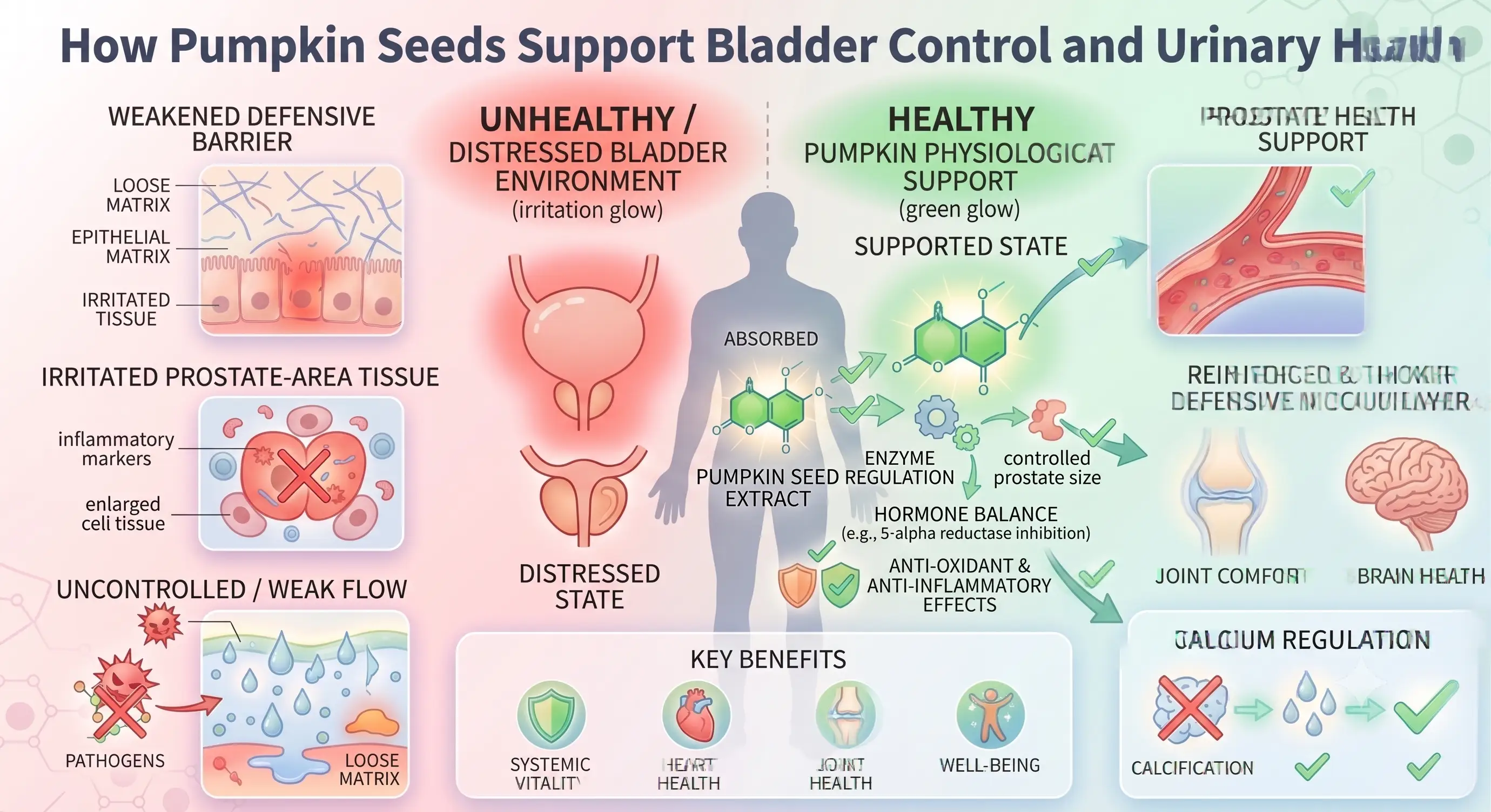
As men age, the prostate commonly enlarges and presses on the urethra, producing weak flow, urgency, night-time urination, and a sense of incomplete emptying — a pattern that needs a urologist's diagnosis rather than self-assessment. The proposed mechanisms for pumpkin seed include inhibition of 5-alpha-reductase (the enzyme converting testosterone to DHT), effects on androgen receptor binding, and anti-inflammatory activity in prostate and bladder tissue. Most of this comes from laboratory work; how much of it operates at realistic human doses is less well established.
2. A Deep Dive Into Pumpkin Seed Extract's Studied Effects
BPH Urinary Symptoms
Several clinical trials, mostly conducted in Germany and Korea and generally modest in size, have reported improvements in International Prostate Symptom Score (IPSS) — the standard measure of urinary symptom burden — with pumpkin seed oil or extract over 3 to 12 months. Some studies also reported improved urine flow rate and quality of life. Reviews note that trials were often small, of variable quality, and sometimes used combination products (commonly with saw palmetto), which makes the contribution of pumpkin seed alone harder to isolate. Placebo responses in urinary symptom research are also substantial.
The reasonable summary: modest evidence of symptom improvement, best regarded as complementary to — not a replacement for — a urologist's assessment and treatment plan.
Overactive Bladder and Nocturia
This is arguably the more distinctive application, and it applies to both men and women. Small trials of water-soluble pumpkin seed extract have reported reductions in urinary urgency, frequency, and night-time waking. Proposed mechanisms include effects on pelvic floor and bladder muscle function rather than on the prostate. The studies are small and mostly conducted by or with ingredient manufacturers, so the evidence should be described as preliminary.
Nutritional Contribution
Pumpkin seeds themselves are among the best food sources of magnesium and a good source of zinc — a nutrient concentrated in prostate tissue. Whole seeds are a genuinely worthwhile food independent of any extract.
What the Evidence Does and Doesn't Show
| Use | Strength of evidence | Notes |
|---|---|---|
| BPH urinary symptom scores | Modest / preliminary | Small trials; often combination products |
| Overactive bladder, nocturia | Preliminary | Small studies of water-soluble extract |
| Shrinking the prostate | Not supported | No meaningful size reduction shown |
| Tolerability | Good | Among the gentler options in this category |
| Treating prostatitis, prostate cancer, or infertility | Not established | Do not use for these purposes |
3. Shop Smart: How to Choose the Right Extract
Step 1: Water-Soluble Extract vs. Oil
- Water-soluble pumpkin seed extract: The form used in the bladder and nocturia studies, sometimes under a branded designation. If overactive bladder or night-time urination is your concern, this is the form matching the research.
- Cold-pressed pumpkin seed oil or phytosterol-standardised softgels: The form used in most BPH symptom trials, delivering the fat-soluble sterols and fatty acids.
- Whole or ground seeds: A healthy food providing magnesium and zinc, but delivering far less of the concentrated sterol fraction used in studies.
Step 2: Standardisation
Look for a stated phytosterol or beta-sitosterol content rather than just "pumpkin seed extract 500 mg." Roasted snacking seeds will not provide the concentrated amounts used in research — that is a difference in dose, not a claim about medicinal potency.
Step 3: Freshness and Third-Party Testing
Pumpkin seed oil is high in polyunsaturated fats and oxidises readily; choose products in opaque packaging with a clear manufacture or expiry date, and store as directed. Look for USP or NSF verification or a certificate of analysis.
4. Everyday Habits: Supporting Bladder and Pelvic Health
- Get assessed first. Urinary symptoms in older men can reflect BPH, but also infection, bladder dysfunction, medication effects, diabetes, or prostate cancer. A urologist's evaluation — including PSA where appropriate — should come before or alongside any supplement.
- Consistency over 8 to 12 weeks: Studies in this area measure outcomes over months. Judging after two weeks tells you nothing.
- Evening dosing for nocturia is a common practical approach, though it has not been rigorously compared with morning dosing.
- Fluid timing: Reducing fluids two to three hours before bed, and limiting evening alcohol and caffeine, often reduces night-time waking noticeably.
- Pelvic floor exercises have good evidence for urinary urgency and post-void dribbling in both men and women, and a physiotherapist can teach them properly.
- Review medications: Decongestants, some antihistamines, and certain antidepressants can worsen urinary retention.
- Whole pumpkin seeds are a sensible dietary habit — a good source of magnesium and zinc regardless of any urinary effect.
5. The Perfect Match: Synergies and Incompatibilities
Nutrients rarely work in isolation, though combining two supplements with modest individual evidence does not produce strong combined evidence.
✅ Commonly Combined
- Saw Palmetto: The most familiar pairing, and several trials of pumpkin seed have used combination products. Worth knowing that large, well-conducted trials of saw palmetto alone did not show benefit for BPH symptoms — so this combination should be presented as commonly used rather than proven.
- Beta-sitosterol: Arguably has the better-supported evidence base of the plant sterols for BPH symptom scores, and is the constituent class pumpkin seed supplies.
- Zinc and Lycopene: Zinc is concentrated in prostate tissue; lycopene is a carotenoid studied mainly in observational prostate research. Keep zinc within recommended amounts, since sustained high-dose zinc causes copper deficiency.
- Selenium — with caution: often included in prostate formulas, but note that large trial data did not support selenium for prostate cancer prevention and raised concerns at high doses. Stay within recommended intake.
❌ Requiring Caution
- Lithium: Pumpkin seed extract has a mild diuretic effect, which may reduce lithium clearance and raise blood levels. Do not combine without physician supervision and lithium level monitoring.
- Diuretics and blood pressure medication: Possible additive effects on fluid balance and blood pressure; monitor.
- Prescription BPH medication (alpha-blockers, finasteride, dutasteride): Combining supplements acting on similar pathways should be discussed with your urologist rather than assumed additive.
- Anticoagulants: Discuss with your physician, and stop before surgery as your surgical team advises.
- Seed or nut allergy: Uncommon but possible; discontinue if you react.
6. Dosage, Timing, and Safety
Typical Ranges Used in Research
- Pumpkin seed oil: Commonly around 320–1,000 mg daily in BPH trials, often split into two doses.
- Water-soluble extract: Bladder studies have generally used a few hundred milligrams daily.
- Whole seeds: A handful (roughly 30 g) daily as a food, supplying useful magnesium and zinc.
- Timing: With food, which improves tolerability of oil-based products. Duration of 8 to 12 weeks minimum before judging.
Tolerability
Pumpkin seed extract is generally very well tolerated — one of its genuine advantages. Reported effects are mild and mostly digestive: stomach upset, nausea, or loose stools, usually avoidable by taking it with food.
Also consult a healthcare professional before use if you take lithium (reduced clearance), diuretics, blood pressure medication, anticoagulants, or prescription BPH medication; if you are scheduled for surgery; or if you are pregnant or breastfeeding, where concentrated extracts have limited safety data. Tell your doctor what supplements you take before PSA testing so that results are interpreted in full context.
7. Frequently Asked Questions
Q. Will it shrink my prostate?
A. There is no evidence that it does. The research concerns symptom scores and urinary flow, not prostate size. Prescription 5-alpha-reductase inhibitors are the medications shown to reduce prostate volume.
Q. Can women take it?
A. The overactive bladder research included women, and there is no prostate-specific barrier to use. Safety data in pregnancy and breastfeeding are limited, so those are exceptions.
Q. Are roasted pumpkin seeds enough?
A. They are a healthy food and a good source of magnesium and zinc, but they deliver far less of the concentrated sterol fraction used in studies. Think of them as good nutrition rather than an equivalent to an extract.
Q. How long before I know if it works?
A. Give it at least 8 to 12 weeks. If symptoms are meaningfully affecting your sleep or daily life, seeing a urologist is a better use of that time than waiting.
Q. Will it affect my PSA test?
A. Pumpkin seed extract is not known to significantly alter PSA, unlike prescription 5-alpha-reductase inhibitors which roughly halve it. Still, tell your doctor what you take.
8. Conclusion and Precautions
Pumpkin seed extract sits at the gentler end of the men's health category: a food-derived source of phytosterols with a long tradition of use, an excellent tolerability record, and a modest body of clinical research suggesting improvement in urinary symptom scores and, in smaller studies, bladder comfort and night-time urination. It is not shown to shrink the prostate and it is not a treatment for BPH. Used consistently for two to three months as part of a plan that includes a urologist's assessment, fluid timing, and pelvic floor work, it is a reasonable low-risk option.
⚠️ Precautions: The FDA has not evaluated pumpkin seed extract for the treatment of any medical condition, and this article is not medical advice. If you have urinary symptoms, consult a urologist first — a supplement cannot distinguish BPH from prostate cancer or other causes, and delaying assessment carries real risk. Consult a healthcare professional before use if you take lithium, diuretics, blood pressure medication, anticoagulants, or prescription BPH medication, or if you are pregnant or breastfeeding. Seek prompt medical care for blood in the urine, inability to urinate, fever with urinary symptoms, or rapidly worsening symptoms.
9. Sources and References
- Mount Sinai Health System — Pumpkin seed
https://www.mountsinai.org - NIH National Institute of Diabetes and Digestive and Kidney Diseases (NIDDK) — Prostate Enlargement (BPH)
https://www.niddk.nih.gov - American Urological Association (AUA) — Benign Prostatic Hyperplasia Guideline
https://www.auanet.org - NIH National Center for Complementary and Integrative Health (NCCIH) — Complementary approaches for BPH
https://www.nccih.nih.gov - Mayo Clinic — Benign prostatic hyperplasia (BPH)
https://www.mayoclinic.org - Cleveland Clinic — Enlarged prostate and overactive bladder
https://my.clevelandclinic.org
© 2026 Healing-Finder. All rights reserved.