The Complete Ashwagandha Guide: Stress Response, Sleep Quality, and Synergies
1. What Ashwagandha Is and What "Adaptogen" Means
Ashwagandha (Withania somnifera) is a shrub whose root has been used in Ayurvedic tradition for centuries and which is now one of the most extensively studied botanicals in modern supplement research. It is commonly described as an adaptogen — a term used for plants studied for their potential to help the body cope with physiological and psychological stress[1].
It is worth being clear about that word. "Adaptogen" is a research and traditional-use category, not a regulatory or clinical classification, and it does not imply that a plant treats any medical condition. In Ashwagandha's case, the label reflects a body of small-to-moderate clinical trials examining stress-related outcomes rather than a single established mechanism.
The Proposed Mechanism
When you are under sustained stress, the hypothalamic-pituitary-adrenal (HPA) axis drives the release of cortisol, keeping the body in a heightened "fight or flight" state. Ashwagandha has been studied for its potential to help moderate this cortisol response, and researchers have also examined its interaction with GABA-related signalling, which is associated with calming brain activity. The active constituents most often credited are a group of steroidal lactones called withanolides. These mechanisms are plausible and supported by preliminary human and laboratory data, but they are not fully established.
2. A Deep Dive Into Ashwagandha's Studied Effects
Everyday Stress and Tension
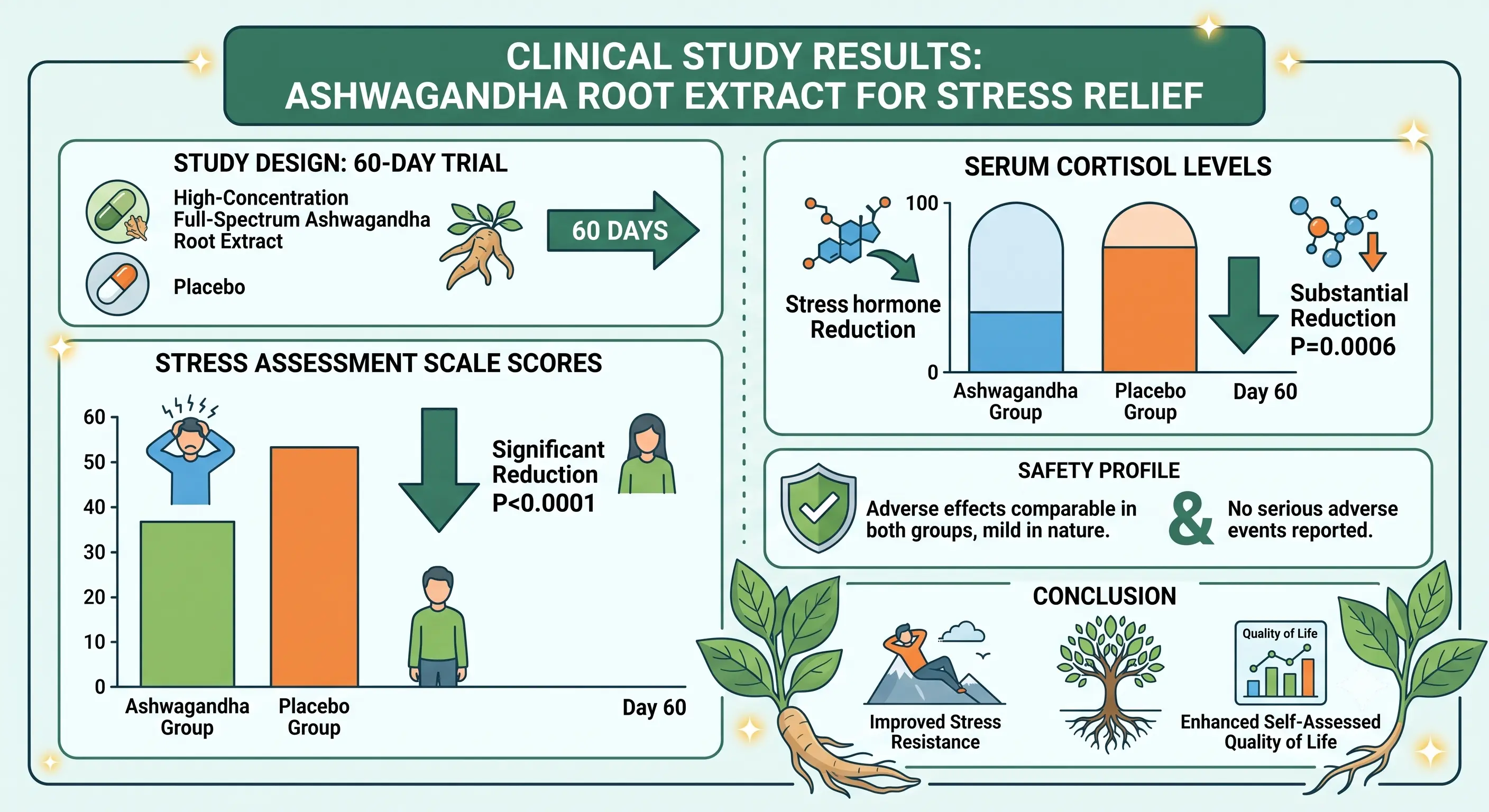
This is the most studied area. Several randomized, placebo-controlled trials — typically running 60 to 90 days with standardized root extracts — have reported reductions in self-rated perceived stress scores and, in some trials, in measured serum cortisol[2]. Reviews of this literature generally describe the results as promising while noting real limitations: most trials are small, many are relatively short, several were funded by ingredient manufacturers, and the outcome measures are subjective questionnaires.
Importantly, this research relates to general stress and tension in otherwise healthy adults, not to diagnosed anxiety disorders. Anyone with a diagnosed condition should be guided by their physician or mental health provider, and should not stop or adjust prescribed treatment.
Sleep Quality
The species name somnifera means "sleep-inducing," reflecting traditional use. Modern trials have examined sleep onset latency, sleep efficiency, and subjective sleep quality, with some reporting modest improvements — most consistently in people who report poor sleep to begin with. By helping moderate evening stress arousal, Ashwagandha may support the body's natural wind-down process and help some people ease the "tired but wired" feeling. It is not a sedative and should not be treated as a sleeping medication.
Exercise Performance and Recovery
A number of small trials have examined Ashwagandha in the context of resistance training, reporting improvements in measures such as maximal oxygen uptake, strength, or recovery markers. The studies are small and heterogeneous, so this should be read as an area of active interest rather than an established benefit.
Cognitive and Mood-Related Measures
Some studies have looked at attention, working memory, and reaction time, with mixed and generally preliminary results. Claims of enhanced cognition are not currently well supported.
Hormonal Measures
Ashwagandha is widely marketed for testosterone and fertility. Some small trials in men have reported changes in hormone or semen parameters, but the studies are limited in size and quality, and the findings should not be presented as reliable outcomes. Ashwagandha also appears to influence thyroid hormone levels in some individuals — which is a safety consideration rather than a benefit, and is covered in Section 6.
What the Evidence Does and Doesn't Show
| Use | Strength of evidence | Notes |
|---|---|---|
| Perceived everyday stress | Moderate (but limited quality) | Multiple small RCTs; subjective measures, some industry-funded |
| Sleep quality | Preliminary / modest | Effects clearest in people with poor baseline sleep |
| Exercise performance | Preliminary | Small, varied trials |
| Cognition and memory | Insufficient | Mixed results |
| Testosterone, fertility | Insufficient | Small studies; heavily over-marketed |
| Treating anxiety or depressive disorders | Not established | Not a substitute for professional care |
3. Shop Smart: How to Choose the Right Ashwagandha
Step 1: Standardized Extracts vs. Raw Powder
Raw root powder is inexpensive but variable in potency, and most clinical research has used standardized extracts. If you want your product to resemble what was studied, look for a named, standardized extract:
- KSM-66: A root-only extract standardized to roughly 5% withanolides, used in many of the published stress and performance trials. Often chosen for daytime use.
- Sensoril: Derived from root and leaf, standardized to a higher withanolide content (around 10%) and generally described as more calming. More often used in the evening.
- Generic extracts: Not inherently poor, but check that the label states the plant part, the extraction ratio, and the withanolide percentage.
There is no strong head-to-head evidence establishing one branded extract as superior; the practical difference is in the standardization and the part of the plant used.
Step 2: Check the Withanolide Content and Plant Part
The label should state the withanolide percentage and whether the extract is root-only or root-and-leaf. Traditional Ayurvedic use centers on the root; leaf-containing extracts have a different constituent profile.
Step 3: Third-Party Testing Matters More Here
Botanical supplements carry more quality variability than isolated vitamins — adulteration, incorrect plant species, and heavy metal contamination have all been documented in the wider herbal market. Independent verification (USP, NSF, Informed Choice, or a published certificate of analysis) is a meaningful signal.
4. Everyday Habits: Finding Calm
- Timing: Root-only extracts are often taken in the morning or early afternoon; more sedating preparations are usually taken one to two hours before bed. If you notice drowsiness, shift the dose later in the day.
- With food: Taking it with a meal reduces the stomach upset that some people experience, especially at higher doses.
- Traditional preparation: A classic Ayurvedic nighttime routine mixes Ashwagandha powder into warm milk with cinnamon and honey as part of a wind-down ritual.
- Give it time, then reassess: Most trials ran 60 to 90 days. A reasonable approach is to trial it for a defined period, note how you actually feel, and stop if there is no meaningful difference.
- The unglamorous fundamentals: Consistent sleep and wake times, daylight exposure in the morning, regular movement, limiting caffeine after early afternoon, and reducing evening screen light all have stronger evidence for stress and sleep than any supplement. Ashwagandha works best as an addition to these, not a replacement.
5. The Perfect Match: Synergies and Incompatibilities
Nutrients and botanicals rarely work in isolation. Some combinations complement one another; others raise genuine safety concerns.
✅ Combinations Commonly Used Together
- L-Theanine and Magnesium: L-Theanine has been studied for its effect on alpha brainwave activity and relaxed alertness, while magnesium contributes to normal muscle and nervous system function. A frequently used calm-support combination.
- Rhodiola Rosea: Another adaptogen, often paired for people dealing with fatigue and burnout. Because Rhodiola tends to be more stimulating, this pairing is usually taken earlier in the day.
- B-Complex Vitamins: Support normal nervous system function and energy metabolism, which is often depleted alongside chronic stress.
❌ Combinations to Avoid or Discuss With a Doctor
- Thyroid medication and hyperthyroidism: Ashwagandha has been associated with increases in thyroid hormone levels. Avoid if you have hyperthyroidism, and consult your doctor before use if you take levothyroxine or any thyroid medication.
- Sedatives, sleep medication, and alcohol: Additive drowsiness is possible. Do not combine without medical advice.
- Immunosuppressants: Ashwagandha may stimulate immune activity, which could theoretically counteract medication used after transplant or for autoimmune disease.
- Blood pressure and diabetes medication: Possible additive effects; monitoring is advisable.
- Other hepatotoxic substances: Given the liver-injury reports described below, combining Ashwagandha with alcohol, other liver-stressing supplements, or medication that affects the liver deserves caution.
6. Dosage, Timing, and Safety
Typical Ranges Used in Research
- Standardized root extract: Commonly 300–600 mg per day, taken once or split into two doses.
- Higher-concentration extracts: Often used at lower amounts (roughly 125–250 mg per day).
- Duration: Most trials ran 8 to 12 weeks. There is limited data on continuous use beyond a few months, so periodic breaks and a check-in with a healthcare professional are sensible.
Commonly Reported Side Effects
Ashwagandha is generally well tolerated in the short term. The most frequently reported effects are gastrointestinal — nausea, stomach discomfort, loose stools — along with drowsiness in some people, particularly at higher doses or with more sedating extracts.
Who Should Not Use Ashwagandha
- Pregnancy: Avoid. Traditional and animal data raise concerns about pregnancy loss, and safety has not been established. Breastfeeding safety data are also insufficient.
- Liver disease or abnormal liver tests: Avoid, per the warning above.
- Thyroid disease, especially hyperthyroidism: Avoid or use only under medical supervision.
- Autoimmune conditions: Discuss with your physician first, given possible immune-stimulating effects.
- Hormone-sensitive conditions, including prostate cancer: Consult your physician before use.
- Nightshade allergy: Ashwagandha belongs to the Solanaceae family.
- Upcoming surgery: Stop at least two weeks beforehand, or as your surgical team advises, because of possible sedative and blood-sugar effects.
- Children and adolescents: Not enough safety data; not recommended without pediatric guidance.
7. Frequently Asked Questions
Q. How long until I notice anything?
A. Most trials measured outcomes after 60 to 90 days. Some people report a subtle change within a couple of weeks; others notice nothing at all, which is a normal outcome for a supplement of this kind.
Q. Does it make you sleepy during the day?
A. It can, particularly with more concentrated or leaf-containing extracts. If that happens, moving the dose to the evening usually resolves it.
Q. Can I take it with my antidepressant or anti-anxiety medication?
A. Ask your prescribing physician or pharmacist first. Do not add it on your own and do not reduce prescribed medication because you have started a supplement.
Q. Should I cycle it?
A. There is no established requirement to cycle, but because long-term safety data are limited, many people take periodic breaks and reassess whether it is still providing value.
Q. Does it "blunt" emotions?
A. Some users describe feeling emotionally flat. This is anecdotal rather than a documented effect, but if you notice it, it is a reasonable reason to stop and reassess.
8. Conclusion and Precautions
Ashwagandha is among the more thoroughly researched botanicals available, and the clinical literature on everyday stress and sleep is reasonably encouraging — while also being limited by small trial sizes, subjective outcomes, and industry funding. Used sensibly, as a standardized extract, for a defined trial period, alongside sleep and lifestyle fundamentals, it may help support the body's everyday stress response and a sense of calm. It is not a substitute for medication or care prescribed by a physician, and the liver and thyroid considerations above deserve genuine attention rather than a footnote.
⚠️ Precautions: The FDA has not evaluated Ashwagandha for the treatment of any medical condition, and this article is not medical advice. Avoid if pregnant or breastfeeding, if you have liver disease, hyperthyroidism, or a nightshade allergy. Stop immediately and seek medical attention if signs of liver problems appear. Consult a healthcare professional before starting, particularly if you take prescription medication, have an autoimmune or thyroid condition, or are scheduled for surgery.
9. Sources and References
- National Institutes of Health (NIH) / PubMed — Ashwagandha for Stress and Anxiety
https://pubmed.ncbi.nlm.nih.gov/23439798/ - Cleveland Clinic — What Is Ashwagandha?
https://my.clevelandclinic.org - Mayo Clinic — Adaptogens and Stress
https://www.mayoclinic.org - Memorial Sloan Kettering Cancer Center — Ashwagandha
https://www.mskcc.org - American Botanical Council — Ashwagandha Root Overview
https://www.herbalgram.org - NIH LiverTox — Clinical and Research Information on Drug-Induced Liver Injury: Ashwagandha
https://www.ncbi.nlm.nih.gov/books/NBK548536/ - NIH National Center for Complementary and Integrative Health (NCCIH) — Ashwagandha
https://www.nccih.nih.gov
© 2026 Healing-Finder. All rights reserved.