The Complete Licorice Extract Guide: Stomach Comfort, DGL, and Synergies
1. What Licorice Extract Is and Why the Form Matters So Much
Licorice (Glycyrrhiza glabra) is among the oldest botanicals in traditional herbal practice worldwide. For digestive use it is studied as a demulcent — a substance thought to soothe irritated tissue — and for its potential to stimulate mucin production, which contributes to the protective mucus layer lining the stomach[1].
Licorice is unusual among the supplements on this site in that the form you choose is a safety decision, not a preference. Whole licorice root contains glycyrrhizin, a compound with a well-characterised and potentially serious effect on blood pressure and potassium. Deglycyrrhizinated licorice (DGL) has most of that compound removed. Everything on this page assumes DGL unless stated otherwise, and Section 6 explains why in detail.
2. A Deep Dive Into Licorice's Studied Effects
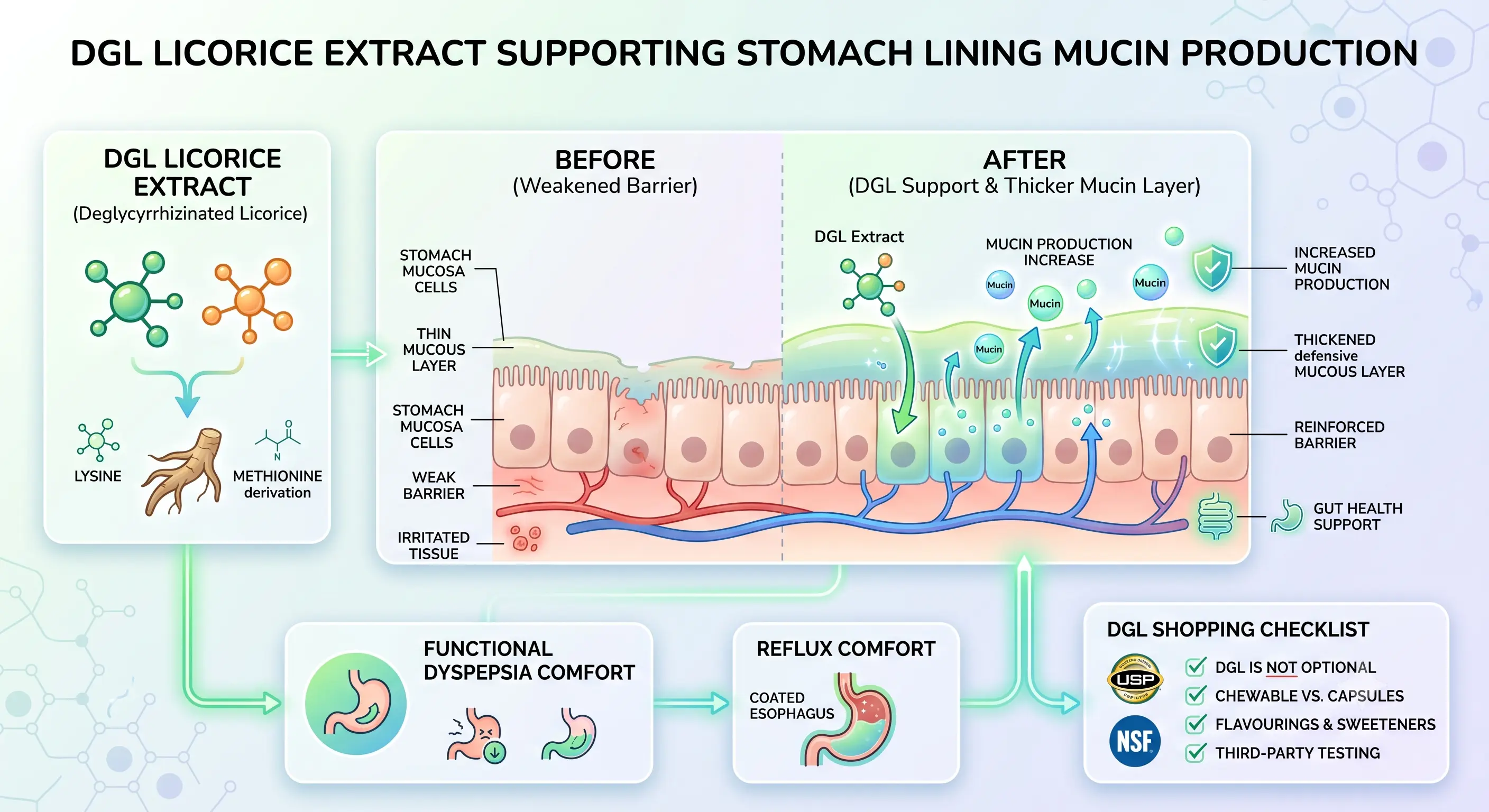
Stomach Lining Support
The proposed mechanism for DGL differs from that of acid-reducing medication: rather than suppressing acid, it is thought to support the stomach's own defensive barrier by encouraging mucus secretion and blood flow to the mucosa. Some older clinical research examined licorice-derived preparations alongside standard care for peptic and duodenal ulcers, and this history is the origin of DGL's reputation. It is worth being candid that much of this literature is decades old, of variable quality by modern standards, and predates the discovery of H. pylori as the dominant cause of ulcers — so it should not be read as evidence that DGL treats ulcers today.
Functional Dyspepsia and Everyday Indigestion
More recent research has examined standardized licorice extracts for functional dyspepsia — recurring indigestion, upper abdominal discomfort, and early fullness without an identifiable structural cause. Some small randomized trials report improvement in symptom scores over several weeks. The trials are limited in size and often industry-sponsored, but this is arguably the area where current evidence is most relevant to how people actually use DGL.
Reflux and Heartburn Comfort
Chewable DGL is commonly used before meals with the aim of coating the oesophagus and stomach. Direct clinical evidence for reflux specifically is limited, and much of the support is traditional use and practitioner experience rather than controlled trials[2]. Anyone with persistent GERD symptoms — or with alarm features such as difficulty swallowing, vomiting, weight loss, or black stools — needs medical evaluation, since untreated reflux carries its own complications.
Other Areas Under Study
Licorice compounds have been examined topically for eczema, for sore throat after intubation, and in laboratory studies for antimicrobial and anti-inflammatory activity. These are separate contexts from the digestive use described here and do not support general claims.
What the Evidence Does and Doesn't Show
| Use | Strength of evidence | Notes |
|---|---|---|
| Functional dyspepsia / indigestion comfort | Preliminary | Small trials with standardized extracts |
| Stomach lining / mucin support | Mechanistic, plausible | Mostly laboratory and older research |
| Reflux comfort | Traditional use; limited trial data | Not a GERD treatment |
| Treating peptic ulcers | Not established today | Ulcers require medical diagnosis and treatment |
| Eradicating H. pylori | Not supported | Requires prescribed antibiotic therapy |
3. Shop Smart: How to Choose the Right Licorice Extract
Step 1: DGL Is Not Optional
Confirm the label explicitly says Deglycyrrhizinated Licorice (DGL) and, ideally, states the residual glycyrrhizin content (commonly under 1–2%). Products labelled simply "licorice root extract" retain glycyrrhizin and are not appropriate for regular daily use for stomach purposes. This is the single most important line on the page.
Step 2: Chewable Tablets vs. Capsules
For upper digestive comfort, chewable tablets or powders are generally preferred: chewing mixes DGL with saliva and allows it to contact the oesophagus on the way down, which is the practical rationale behind the traditional recommendation. Capsules bypass that contact and deliver the material to the stomach directly.
Step 3: Check Flavourings and Sweeteners
Many chewable DGL products are peppermint-flavoured. Peppermint can relax the lower oesophageal sphincter, which may worsen reflux for some people — an unhelpful pairing in a reflux product. Unflavoured, vanilla, or chocolate versions avoid this. Also check for added sugars and sugar alcohols such as sorbitol, which can cause bloating.
Step 4: Third-Party Testing
Botanical quality varies, and because the whole point of DGL is what has been removed, verification matters more than usual here. Look for USP or NSF verification or a certificate of analysis stating glycyrrhizin content.
4. Everyday Habits: Supporting Your Stomach
- Timing: Chewable DGL is typically taken 20 to 30 minutes before meals, so that it is in place before food and acid arrive.
- Meal habits that matter more: Smaller, slower meals; not lying down for two to three hours after eating; raising the head of the bed for night-time reflux; and identifying personal triggers (commonly alcohol, large fatty meals, chocolate, caffeine, and for some people tomato or citrus).
- Review NSAID use: Regular ibuprofen, naproxen, or aspirin is a leading cause of gastric irritation and ulcers. If you take these often, that conversation with a doctor is more valuable than any supplement.
- Alcohol and smoking both impair mucosal defence and worsen reflux.
- Weight and abdominal pressure: Excess abdominal weight and tight waistbands both increase reflux mechanically.
5. The Perfect Match: Synergies and Incompatibilities
Nutrients rarely work in isolation. The cautions here are unusually consequential, so they are worth reading in full.
✅ Commonly Combined
- Aloe Vera (inner leaf) and Slippery Elm: Traditional demulcents frequently paired with DGL in gut-soothing formulas. Evidence is limited and largely traditional; note that whole-leaf aloe containing anthraquinones has laxative effects and is a different product from inner-leaf gel.
- Zinc Carnosine: Studied in Japan for gastric mucosal support, including alongside standard antibiotic regimens in H. pylori research. To be explicit: eradicating H. pylori requires a physician-prescribed antibiotic regimen, and no supplement substitutes for it.
- Probiotics: Some strains have been studied as adjuncts to H. pylori treatment, mainly for reducing antibiotic side effects rather than for eradication itself.
- Melatonin and adequate sleep: Not a licorice pairing as such, but sleep and stress management genuinely influence functional digestive symptoms.
❌ Requiring Real Caution
- Diuretics (especially thiazides and loop diuretics): Both deplete potassium; combining with glycyrrhizin-containing licorice compounds the risk of dangerously low potassium.
- Corticosteroids: Glycyrrhizin prolongs cortisol activity, potentially amplifying steroid effects.
- Digoxin: This is a serious one — low potassium caused by licorice significantly increases the risk of digoxin toxicity, which can be life-threatening.
- Blood pressure medication: Glycyrrhizin raises blood pressure and can work directly against antihypertensive treatment.
- Warfarin and other anticoagulants: Interactions have been reported; monitoring is advisable.
- Hormone-sensitive conditions and hormone therapy: Licorice contains compounds with weak estrogenic activity; discuss with your physician.
- Even with DGL: trace glycyrrhizin remains. If you are on diuretics, steroids, or digoxin, or have heart or kidney disease, discuss even DGL with your doctor or pharmacist rather than assuming it is inert.
6. Dosage, Timing, and Safety
Typical Ranges
- Chewable DGL: Commonly one to two 380–400 mg tablets, chewed 20–30 minutes before meals, up to three times daily.
- Standardized dyspepsia extracts: Studies have used considerably smaller amounts of concentrated extract, typically once or twice daily.
- Duration: DGL is generally used short-term for symptom periods. Extended continuous use should be reviewed with a healthcare professional, and persistent symptoms should prompt medical evaluation rather than an indefinite supplement course.
This is not a theoretical concern about supplements only — food regulators have issued consumer warnings that eating substantial amounts of black licorice candy daily for as little as two weeks can cause heart rhythm problems, particularly in adults over 40. Effects can appear at lower intakes in susceptible people, and the sensitivity varies considerably between individuals.
Do not use glycyrrhizin-containing licorice — and check with a doctor before using even DGL — if you: have high blood pressure, heart disease, heart failure, or an arrhythmia; have kidney or liver disease; have low potassium; take diuretics, corticosteroids, digoxin, or blood pressure medication; or are pregnant, where licorice consumption has been associated with adverse pregnancy outcomes including preterm birth in observational research, or breastfeeding. Stop and seek medical attention if you develop swelling, unusual muscle weakness, an irregular heartbeat, severe headache, or unexplained fatigue.
Other Reported Effects
DGL itself is generally well tolerated; occasional reports include mild nausea or digestive upset. Chewables may contain sweeteners that cause bloating in sensitive people.
7. Frequently Asked Questions
Q. Is licorice tea or candy the same thing?
A. No — most contain glycyrrhizin, which is exactly the compound DGL removes. Note that much "licorice" candy sold outside Europe is flavoured with anise and contains no licorice root at all; check the ingredients.
Q. Can DGL replace my acid-reducing medication?
A. No, and you should not stop prescribed medication to try it. Acid suppression and mucosal support work through entirely different mechanisms, and stopping treatment abruptly can cause rebound symptoms.
Q. How quickly does it work?
A. Chewable DGL is used for near-term comfort before meals, but it is not a fast-acting antacid. Studies of dyspepsia extracts measured outcomes over several weeks.
Q. My blood pressure is well controlled on medication. Is licorice fine?
A. Non-DGL licorice can work directly against blood pressure medication and deplete potassium. Even with DGL, this is worth confirming with your doctor or pharmacist first.
Q. Can DGL clear an H. pylori infection?
A. No. That requires a physician-prescribed antibiotic regimen, and leaving an infection untreated risks ulcers and other complications.
8. Conclusion and Precautions
DGL is a long-used botanical with a plausible mechanism — supporting the stomach's own protective barrier rather than suppressing acid — and modest, mostly preliminary evidence for everyday indigestion. Used as a chewable before meals, for defined periods, alongside sensible meal habits and a review of NSAID use, it is a reasonable comfort measure with a good tolerability record. The non-negotiable part is the form: glycyrrhizin-containing licorice has genuine, documented cardiovascular and potassium risks that place it in a different category from most supplements, and that deserves more attention than it usually gets.
⚠️ Precautions: The FDA has not evaluated licorice extract for the treatment of any medical condition, and this article is not medical advice. Non-DGL licorice taken regularly can raise blood pressure, lower potassium, cause fluid retention, and trigger abnormal heart rhythms — always confirm the label says "DGL." Avoid licorice if you are pregnant. Consult a healthcare professional before use if you have high blood pressure, heart, kidney, or liver disease, low potassium, or take diuretics, corticosteroids, digoxin, blood pressure medication, or anticoagulants. Persistent stomach pain, reflux, difficulty swallowing, vomiting, weight loss, or black stools require prompt medical evaluation.
9. Sources and References
- Mount Sinai Health System — Licorice
https://www.mountsinai.org - NIH National Center for Complementary and Integrative Health (NCCIH) — Licorice Root
https://www.nccih.nih.gov/health/licorice-root - U.S. Food and Drug Administration — Consumer advice on black licorice
https://www.fda.gov - NIH LiverTox — Clinical and Research Information on Drug-Induced Liver Injury: Licorice
https://www.ncbi.nlm.nih.gov/books/NBK548519/ - Mayo Clinic — Licorice: Uses and risks
https://www.mayoclinic.org - Cleveland Clinic — GERD and dietary approaches
https://my.clevelandclinic.org
© 2026 Healing-Finder. All rights reserved.